Writer’s Note: No AI was used in the writing or editing of this article. Thank you for reading and supporting human-generated content.
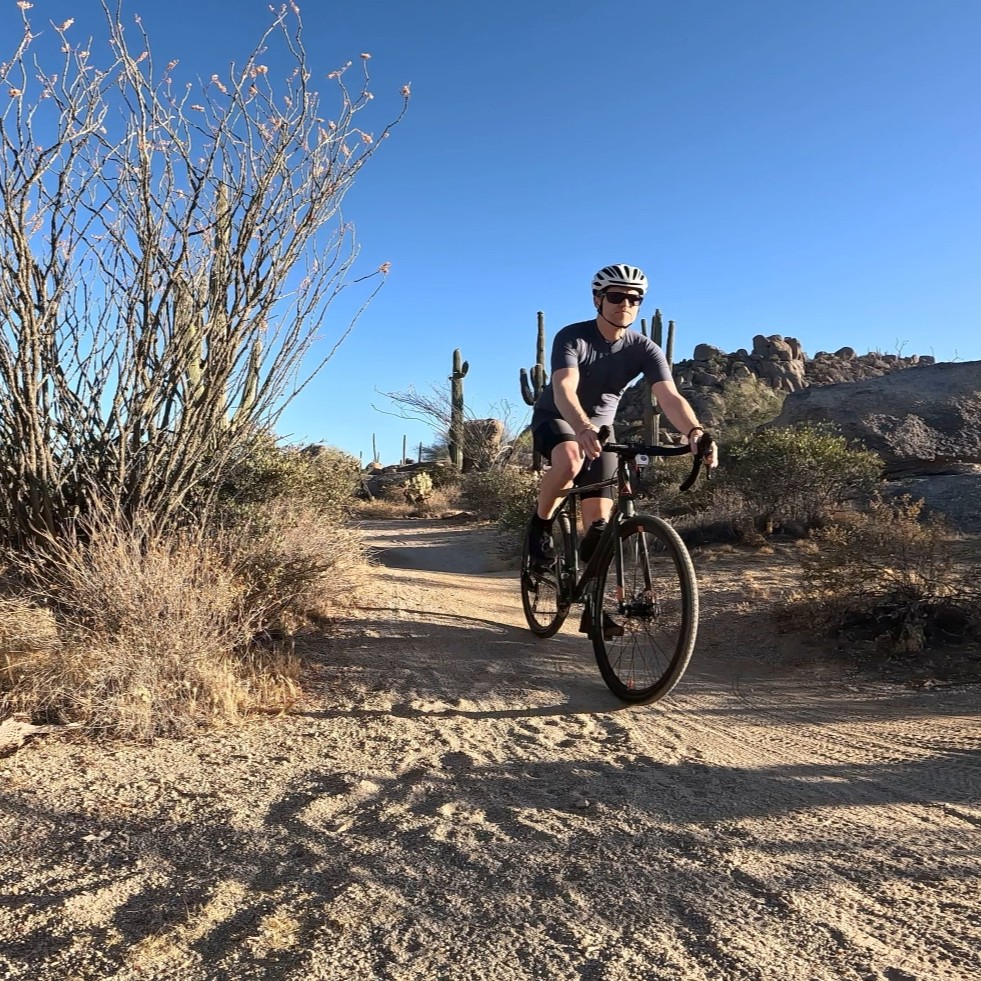
As gravel crunched beneath my 700x42c tires, I cautiously navigated the manicured trails at Browns Ranch in Scottsdale, Arizona.
The trail bell mounted to my handlebars alerted hikers of my approach with a gentle “ting ting ting” as I jostled along the route. I slowed and greeted other hikers and bikers who were also enjoying the pleasant Sunday morning.
Ahead of me, towering saguaro cacti provided a picturesque, yet reassuring, reminder that I live in a unique climate.
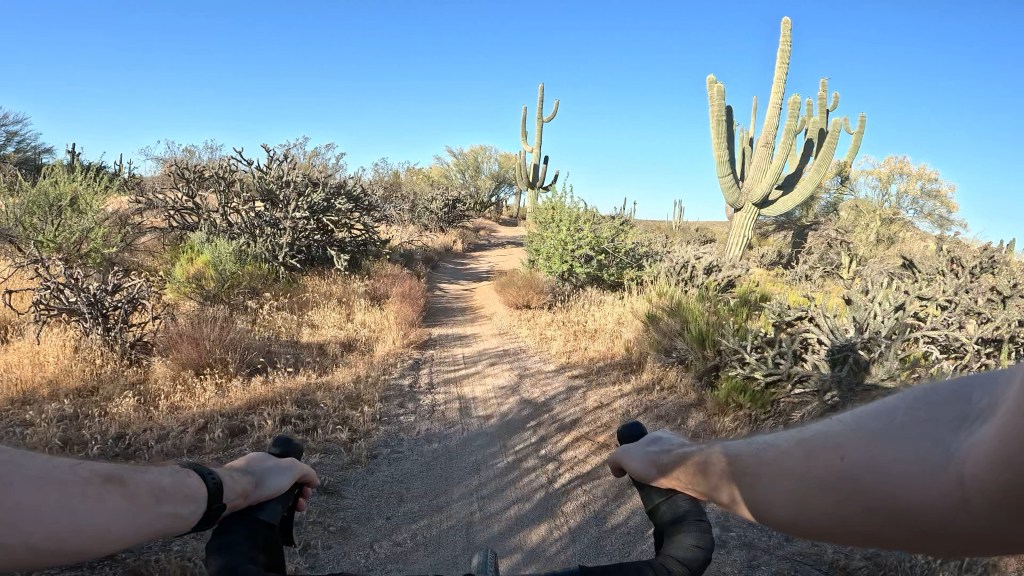
I had been preparing my bike for gravel riding for months. Like most things, I was guilty of overthinking and over-preparing. However, as I navigated the occasional cholla cacti debris and sandy wash, I was grateful for the tubeless Maxxis tires.
It wasn’t my first time riding at Brown’s Ranch (Link: McDowell Sonoran Conservancy – Brown’s Ranch Trailhead). Years ago, my wife and I lived in north Scottsdale. I was working in the area and we were living in a comfortable 1,100 square foot apartment. The McDowell Mountains weren’t far away, so we bought two entry level Trek mountain bikes with 29” tires.
Once we moved from that apartment (one of my favorite places I’ve lived), we sold the mountain bikes. Road cycling became my preferred discipline.
To this day, I’m primarily a roadie and, as my hair turns increasingly gray, I’m now squarely in the MAMIL stereotype. (MAMIL stands for Middle Aged Man In Lycra).
I’ve been cycling for about a decade now and have been looking for variety. Gravel biking is perfect for this need. The bike still has drop-bars, speed can still be a factor, and it can involve long distance travel. But I can worry less about cars, see new places, and learn new bike-handling skills.
Preparing the Bicycle for Gravel
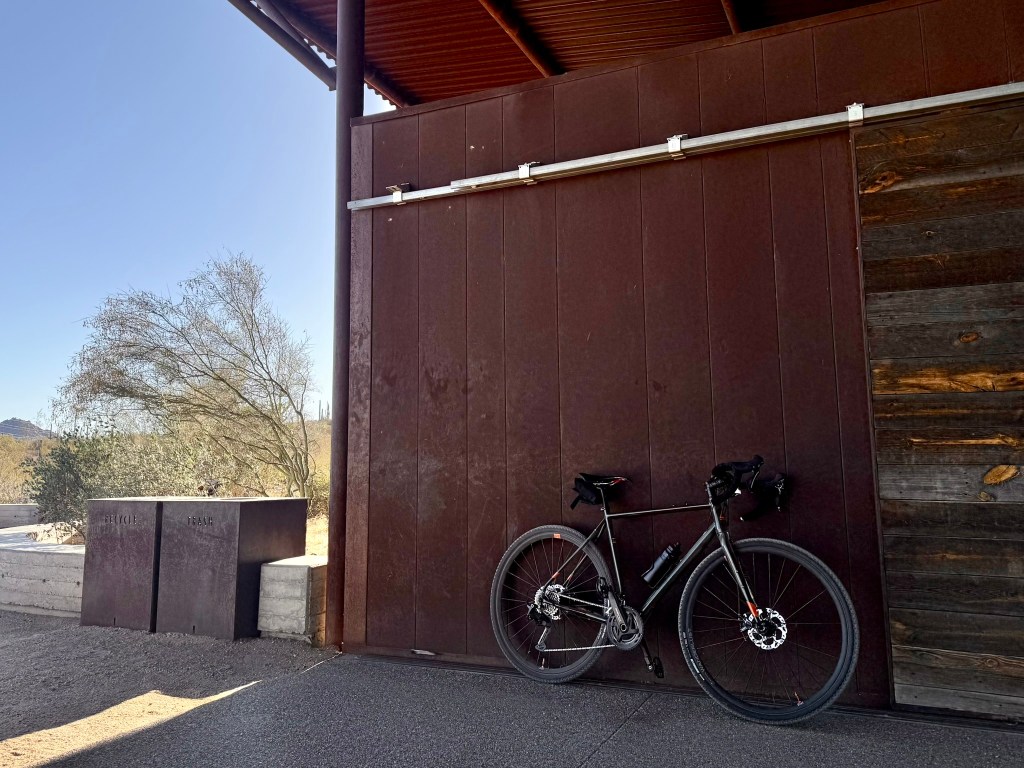
I’ve owned this bicycle since about 2018. It started life as a Fuji Jari 2.5 with a steel frame and a mutt of a drivetrain that was installed before gravel was popular. Fuji equipped it with a road front derailleur and a mountain rear derailleur.
For years, I used it on-road with Schwalbe Marathon tires, Velocity Dyad touring wheels, TPU tubes, and a dynamo hub. Once I bought my Canyon, the Jari was seeing less usage. The Canyon is faster on road, so I didn’t have much reason to ride the Fuji.
It was time to configure it for gravel again. I did this through new Astral Wanderlust wheels, Maxxis Rambler tires, Peaty’s Sealant, and a 2×9 Shimano CUES drivetrain.
My best friend has dubbed the bike as the “apocabike” because it’s practically built for the apocalypse. I stay true to this mantra by keeping everything mechanical. The brakes are still mechanical disc brakes and there’s no electronic shifting.
There’s beauty in simplicity.
Evaluating The Fuji Jari on Gravel
Mile after mile, I gained confidence on the bike. The Maxxis tires provided excellent grip on the desert gravel. I was running the tires at 45 psi, but I think I’ll try a lower pressure next time.
I did encounter toe overlap with the bike. This means that, if my foot was all of the way forward in a pedal stroke, it interfered with the tire’s range of motion for hard turns. It’s not a problem for road riding or faster riding because my front wheel won’t be turned at such a hard angle. However, I had to be mindful in more technical terrain.
Another limitation (compared to a mountain bike) is ground clearance at the bottom bracket and chainring. The geometry of a mountain bike is designed to provide more clearance. There was one small rock garden where I walked the bike for that reason. Also, with no suspension fork, so you feel more of the terrain.
The bike performed quite well, though! I was impressed with my pace. Two mountain bikers pulled over to let me pass at one point. My average speed for the ride was nearly 10 miles per hour and I only had to walk the bike twice. One dismount was for the rock garden, while the second was for a steep, punchy climb with loose gravel. I wasn’t sure about my skill with the higher tire pressure, so I opted to walk.
Summary
Gravel riding is an exciting new chapter for me. I grew up riding ATVs in Arizona. The high cost of vehicles eventually locked me out.
Gravel biking is allowing me to explore this beautiful state again, but at a much lower cost.
The riding is entirely different than road riding. It’s more of a mental challenge when the terrain gets tricky. Plus, it’s an opportunity to get away from cars.
I’ll still be riding paved roads on my Canyon, but this is bringing some much-needed variety to my life.


Leave a comment