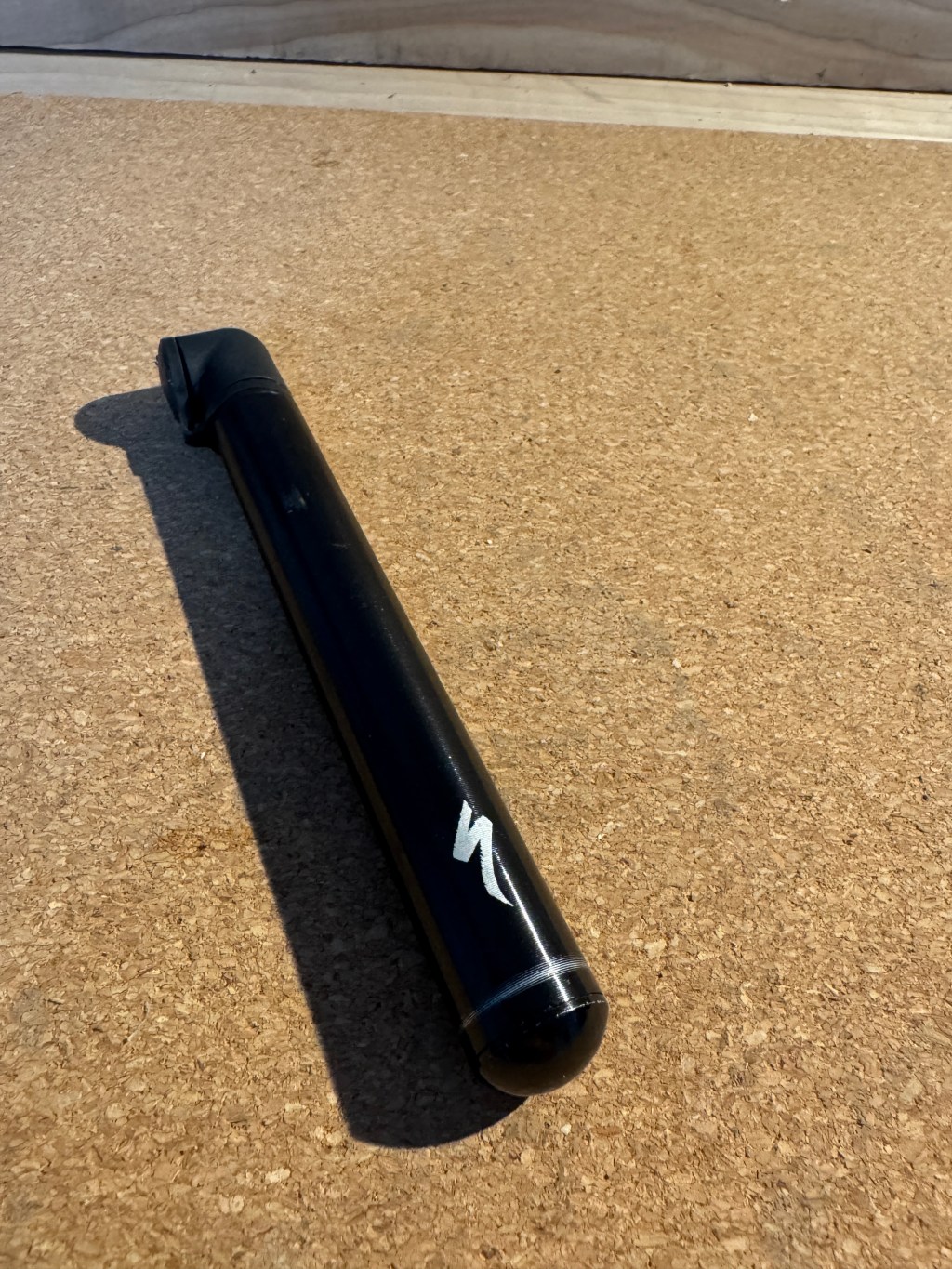
One of the most important pieces of gear for any bicyclist is a roadside air pump. Carrying a pump, along with tire levers and a spare tube, will allow any bicyclist to be more self-reliant on the road.
Nowadays, there are multiple types of air pumps. These include battery powered air pumps, CO2 inflators, frame pumps, and smaller hand pumps. There isn’t necessarily a “best” option, but it does come down to personal preference and your application.
What are CO2 inflators?
When I started cycling, CO2 cartridge inflators were the latest technology for roadside repairs. These pumps use a small valve, along with a disposable CO2 cartridge, to quickly inflate a tire. The most common application seemed to be road bikes, but I’m sure mountain bikers probably used these, too.
I know a few people who still use them, but my experiences had mixed results.
First, the CO2 cartridge is single-use. Beyond the waste component, it also means less room for error when inflating the tire. If the tire bead doesn’t seat properly or the valve doesn’t engage properly, you can use up the cartridge while still being left with a flat tire. The rapid pressurization can also burst a tube if it pinches between the wheel and the tire.
On the plus side, these inflators are compact, affordable, and simple. They can easily fit into a jersey pocket or a saddle bag.
Are battery-powered inflators worth the money?
Rechargeable inflators are the latest invention for roadside tire inflation. These electric bike pumps are becoming more prevalent on my group rides and they can be a compelling product.
These are a small battery built into a pump. They’re small enough to fit into a jersey pocket, but can deliver enough pressure to properly inflate a road bike tire. For convenience, they can’t be beat.
Durability seems to be the challenge with these pumps. I’ve asked a few people if they’ve liked them. On more than one occasion, I was told they’ve gone through multiple of these pumps because of failures. Most times, they mention buying a cheap one and then upgrading to a higher quality option after the cheap one stops working.
I don’t have enough experience to make a specific recommendation, but the old adage of “you get what you pay for” seems to be true here.
Frame pumps: The Tried-And-True Option
Frame pumps are the largest option, but also the simplest. These pumps usually won’t fit into a jersey pocket or bag, but they can attach to the frame with a mount.
Their larger size allows them to pump more air, so they usually inflate tires reasonably quick. Plus, they can accommodate a variety of tire sizes.
No batteries or disposable cartridges are required, so you know they’ll work when needed.
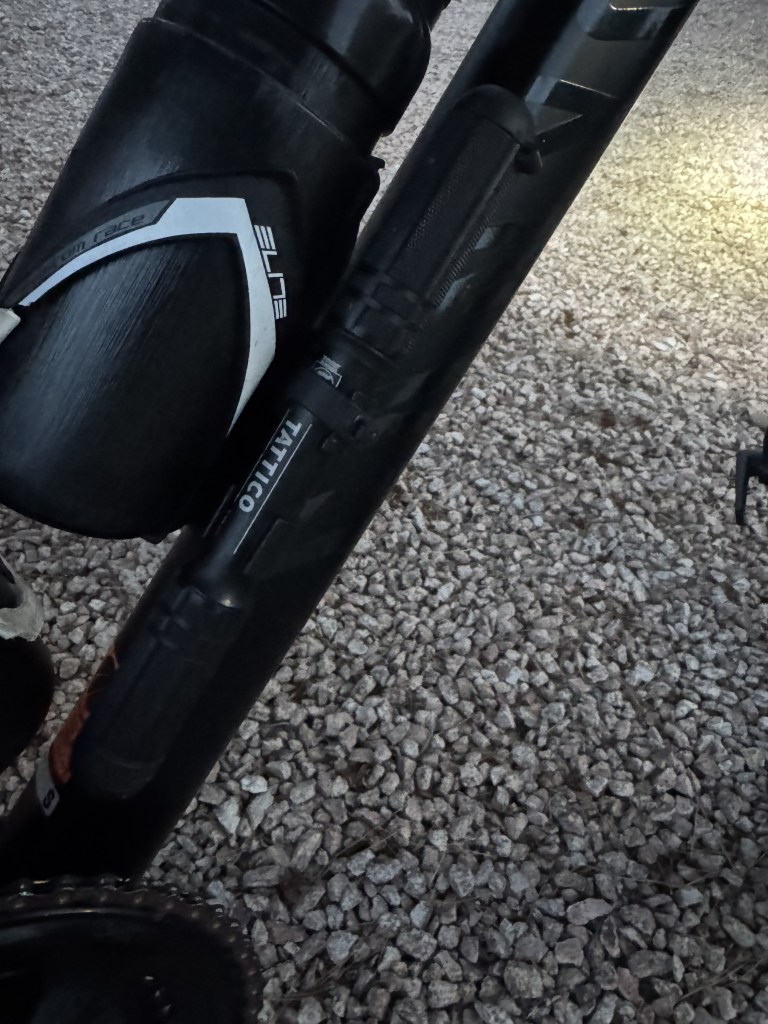
Personally, these are the pumps I use. I have one for each bike. On my Canyon road bike, I mounted a Silca Tattico pump (Silca Official Website: Tattico Frame Pump). It has a retractable hose, a chuck that engages the valve stem, and a sturdy metal body. The size is a good balance between portability and air volume. It does add some weight to the bike, but it provides enough value for me to accept the tradeoff.
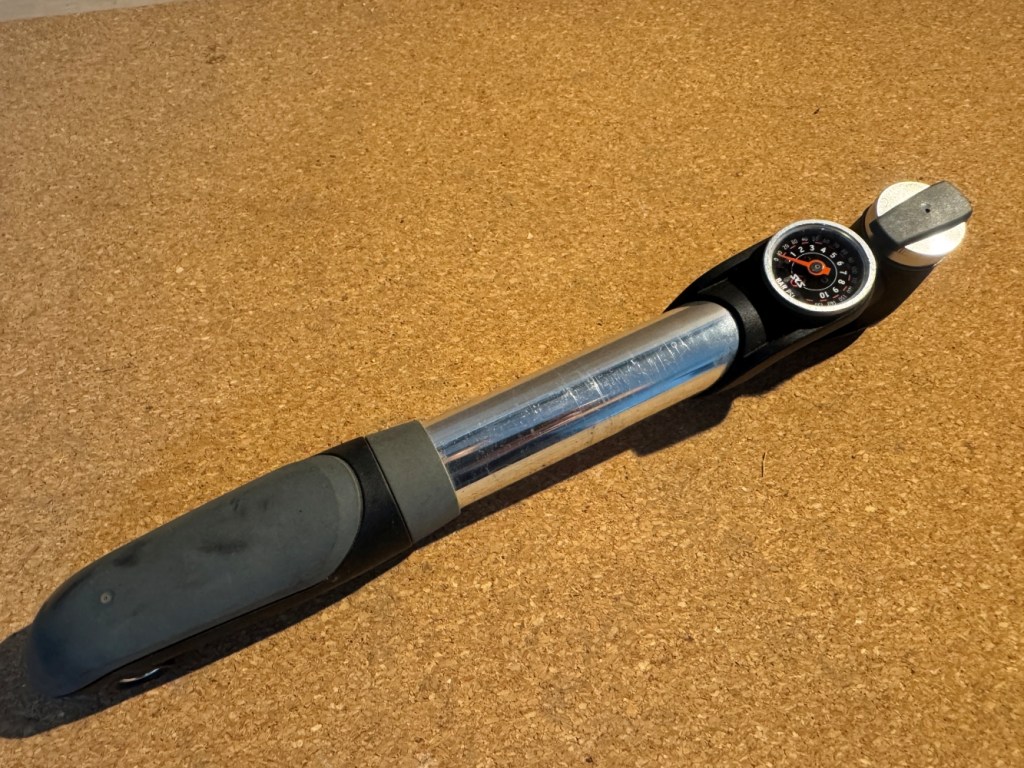
On my Fuji, I carry an SKS frame pump (SKS Official Website: Injex Control Mini Pump). This one is a bit larger, but it has a collapsible handle, as well as pressure gauge to display the tire’s pressure. The chrome finish isn’t quite as sleek for my specific bike, but it’s a nice pump.
What about a mini pump?
Mini pumps also don’t require batteries or CO2 cartridges. They operate in the same way as a frame pump, but they’re designed to be more compact. This means you can store them in a jersey pocket or in a small bag on the bike.
However, the small size is at the expense of air volume. These pumps can be slow to inflate a tire with hundreds of pumps required to reach pressure.
They’ll work, but it’s going to be tedious. I still own one that I occasionally carry.
What pump type should I get?
When selecting an air pump for the bike, it ultimately comes down to preference. What is most important to you?
Do you value simplicity, but are willing to carry a little more weight? Consider a frame pump.
Interested in the latest technology and don’t mind a rechargeable device? A battery powered pump might be a good option.
Looking for something that is small, but also not battery powered? Consider either a CO2 inflator or a mini pump.
The best pump is the one that you’re comfortable carrying and using on the roadside. If you hate using it and leave it home, then it has no value.


Leave a comment