October is here and, at least in Phoenix, the weather has flipped a switch. The mornings are beautiful, and our daily high temperatures are in the mid to upper 90s. It might sound hot, but, when coupled with our low humidity, it’s quite pleasant now.
For me, the arrival of autumn also heralds the beginning of time spent outdoors or in the garage. I’ve noticed that, as I’m nearing my 40s, maintenance has become a bigger part of my life. For me, I’d usually rather maintain the things I own now than buy new things.
I’m not able to spend much time in the garage during the summer months. It’s just too hot. But, with the cooler temperatures, I know that I’ll probably be using things like the Volvo or bicycles more often.
Tedious or Therapeutic? My Approach to Maintenance
Since I want to keep my things running at a high level, I know I spend a lot more time on this than many other people. I don’t mind because it’s therapeutic for me. There’s something calming about seeing an item be restored. It’s also nice to know that I’m prolonging the lifespan and reducing my own consumption.
My experience has also been that good repair people are hard to find. There’s nothing worse than spending a lot of money and waiting a long time for a subpar outcome. I’d rather learn the skills myself nowadays. The widespread availability of online documentation has made it easier. I’ve also found Anthropic’s Claude AI to be a pretty good resource for quick questions (Official Website – Anthopic Company).
Why I Learned to Do My Own Routine Vehicle Maintenance
The next maintenance item on the list for me is our 2009 Volvo XC70 (“Meatball”). I started doing my own oil changes after two consecutive bad experiences with two different dealerships.
One dealership didn’t properly secure the underbody shield. They refused to take accountability for the fact that it arrived with one but got home without one.
Another dealership left a mess under the hood in the engine bay. On this engine, the oil filter sits on top of the motor. If you’re not careful, it’s easy to spill oil all over the place. That clearly happened and the residual oil later dripped onto my driveway from above.
Because I thought the drain plug was leaking, the drip resulted in a second trip to the dealership. Then, they went ahead and ran it through the automatic car wash with a bicycle rack on the back (mangling my license plate) despite a massive post it note on the dash that said, “no wash.”
Learning to do this basic maintenance has also allowed me to choose my own supplies. I can choose my own oil manufacturer and weight, select the oil filter I want, and order new engine and/or cabin air filters. It also allows me to watch for anything unusual and ensure that the engine bay is clean.
Choosing the Right Motor Oil For My Application
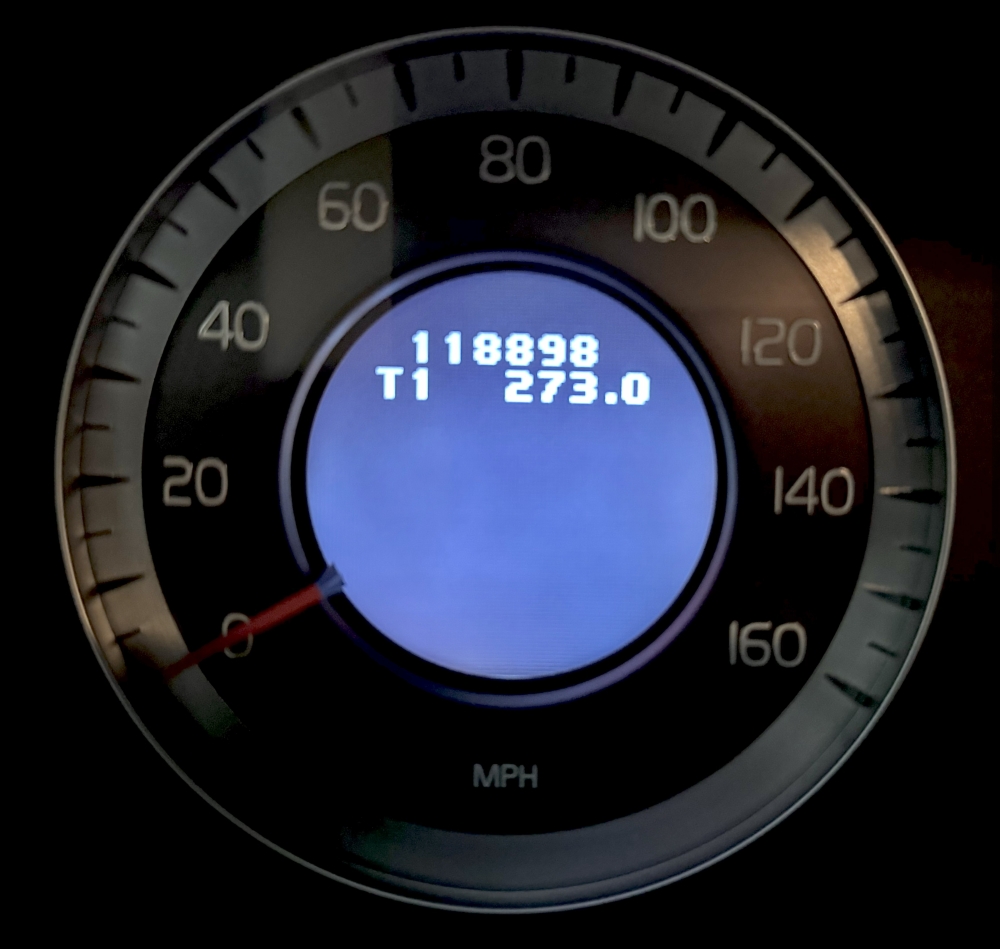
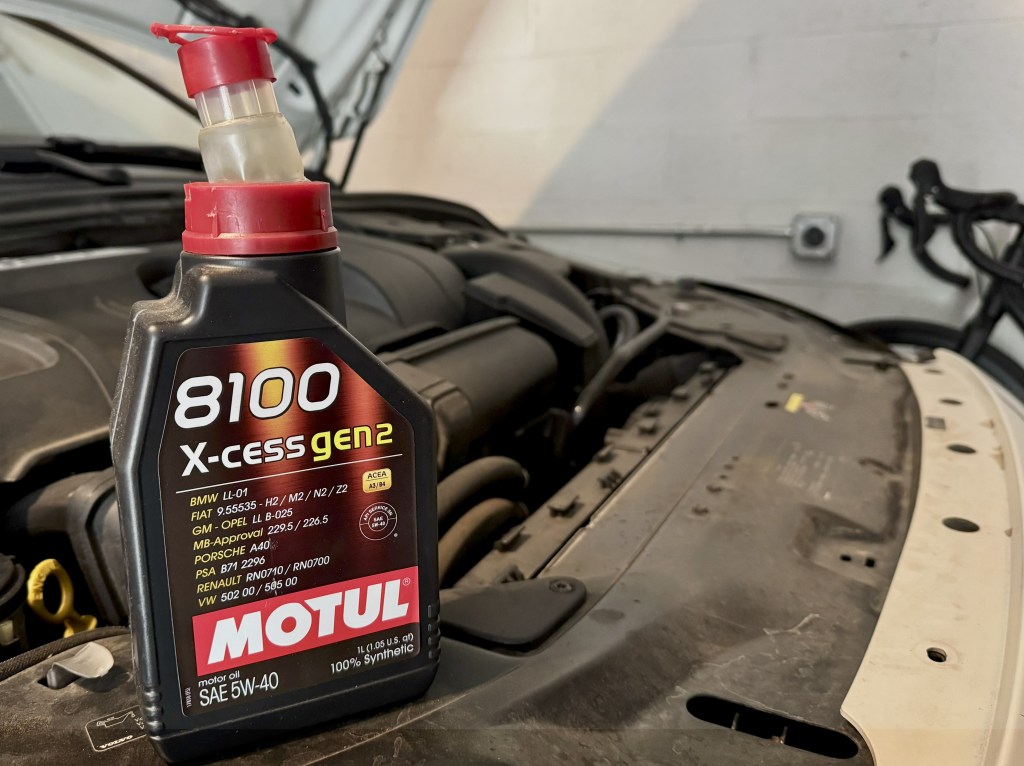
I’ve written about it in past articles, but I’ve had great luck with Motul’s 5W40 oil. The thicker viscosity is approved in Volvo’s manual for my climate. This should allow for better lubrication of the aging engine. The oil was last changed about 6,000 miles ago in October 2024, so I’m relatively on track. I would’ve preferred 5,000 miles, but it didn’t line up for various reasons. It’s still well below the manufacturer’s recommended interval.
The Motul 5W40 oil is tougher to source, so I ordered it from IPD (IPD Official Website – Unaffiliated Link) out of Portland, Oregon. They had to order it this time, so I’ll be waiting a few weeks. I’m willing to wait because, despite brutal highway driving across the Mojave Desert in 115-degree heat, I’ve seen no evidence of oil consumption. Plus, the color of the oil still looks great with it just starting to blacken. I’m impressed. Our California trip had numerous long slogs up steep grades. I truly felt bad for the 16-year-old B6324S engine (Wikipedia Link – Volvo SI6 Engine) at a few points.
Since it’s not a daily driver, I’m willing to have the vehicle sit while I wait for the supplies I want. I’d rather use my bicycles and the local bus routes/light rail during this time of year anyways.
Detailing the Volvo
Another point of pride for me is the paint on our vehicles, so it’s also due for a good detail. First on the list is a thorough wash. After that, a claybar will be used on the paint for wax preparation. As the name implies, a claybar is a piece of clay that is used, in conjunction with a purpose-specific lubricant, to remove contaminants from the paint. It lifts things like embedded dirt, sap, and other materials from the paint. I’m always astonished at how much it collects.
Once the paint has been clayed, it will be time for wax. I don’t own an orbital waxer anymore, so I’ll be doing this step by hand. This doesn’t provide the same level of effort, but, since the paint is getting older, perhaps this isn’t a bad idea anyways. I’m going to go old-school and use carnauba wax. It might not provide the same lasting coverage as more modern synthetic waxes, but I do like the look of it.
The Never-Ending List
Once I’m done with these routine tasks, there are some bigger projects I’m considering. Some of these to-do items are things like refreshing the rear liftgate hatch or replacing the rear shocks. However, I haven’t committed to those ideas yet. We’ll see.
 Pistons Then Pedals
Leave a comment