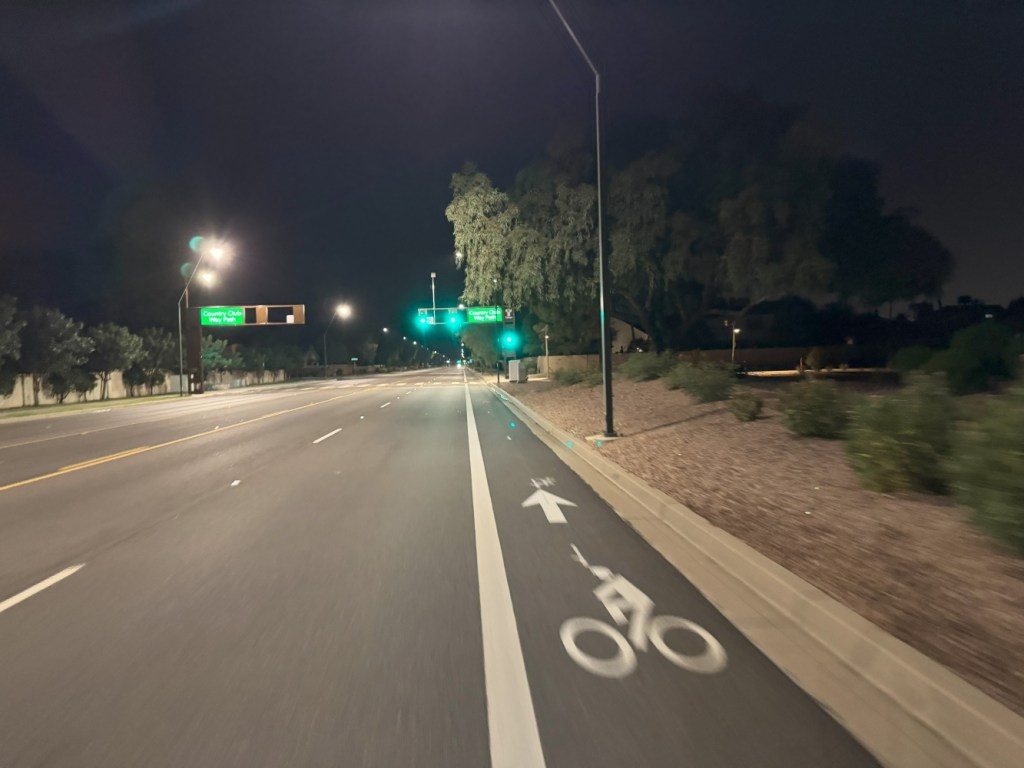
Early September is a special time in Phoenix. Our high temperatures are still often in the low triple digits, but the relentless overnight heat shows signs of retreat. Many people, including myself, emerge from months of reclusive behavior to spend time outdoors again.
For me, I notice a shift in my mental health. I’m able to put away the TacX trainer, cancel Zwift, and return to outdoor cycling. I wake up at 4:00 AM because, although it took some time to get used to, I’d rather wake up early than cycle in the heat. This is common here. My typical routes through Tempe and Chandler often pass other runners, cyclists, and dog walkers.
For me, these early morning bike rides are a therapeutic start to the day. Not only can I bike without the heat, but the roads are gloriously empty. With the exception of the occasional car, it is mostly just service vehicles, first responders, and, at least in my area, roaming Waymo vehicles. Motorists tend to be polite and provide more than enough space as they pass.
Another benefit in my immediate area is the timing of street lights. Chandler has installed traffic detectors at many signals which can also detect bicyclists. Apparently, these use optical recognition, rather than the old-school method of magnetic loops in the pavement.
Best of all, during off-peak traffic times, the lights will change pretty quickly if they detect you. I’m under the impression they mostly revert to timing during peak traffic times, but I don’t know that for sure. Many other cities, like Tempe, don’t seem to have incorporated these sensors yet.
Once November arrives, I’ll probably shift back to afternoon rides. Contrary to popular belief, the desert actually does get cold at night. While it might not be cold enough to freeze, it’s still very brisk when you’re out bicycling in the dark and in low humidity.
Life in the desert is all about adaptation. Whether it’s our outdoor recreation schedule, our approach to water resources, or the way we build houses here, you’re most likely to thrive in the desert if you can adapt to the natural environment’s demands.

 Pistons Then Pedals
Leave a comment