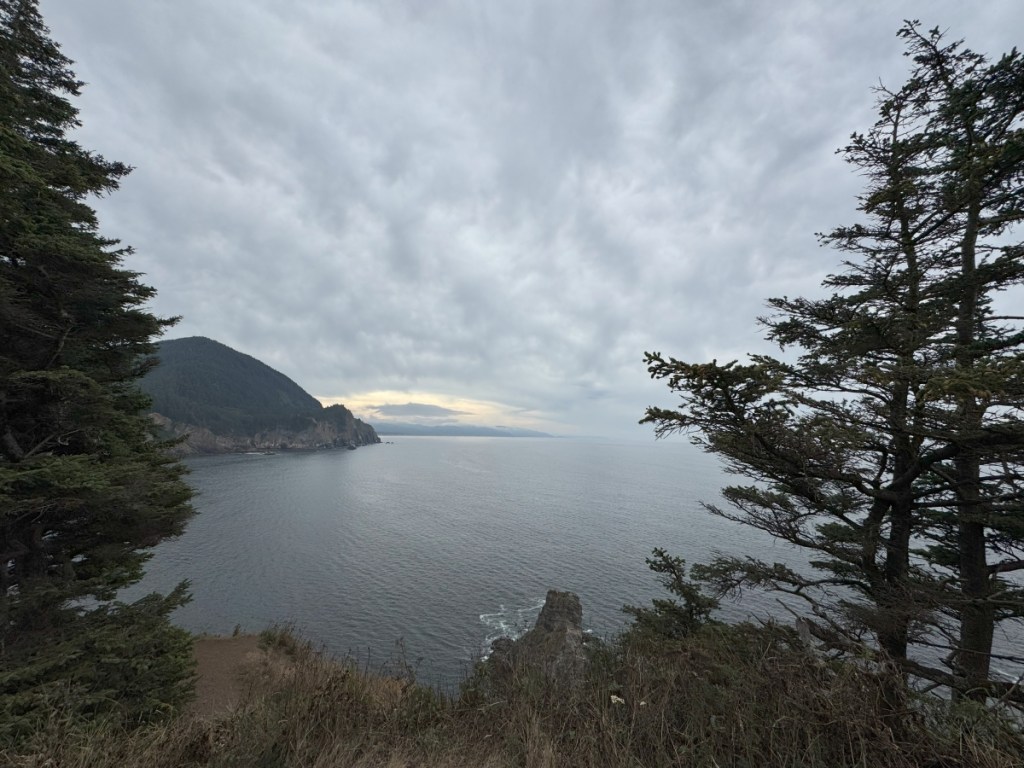
While we expected to spend our entire weekend in downtown Portland, Saturday provided us with an unexpected change of plans. My wife’s friend had invited us, along with a group of others, on a day trip to the Oregon coast. We were excited about the invitation, especially since I never turn down an opportunity to see the ocean.
The plan was for us to ride with them to the coast, but, first, we needed to get to our meeting spot. We were to arrive by 7:15 AM at a house in the Hillsdale neighborhood. An Uber was considered, but I preferred our original plan of using TriMet for the weekend.
After all, we don’t have public transit like this at home in Phoenix. I wanted to get the most out of it. The 54-bus left from a stop near our downtown hotel and the travel time would only be about 20 minutes. Not bad!
Taking TriMet from Downtown to the Suburbs
So, after a simple breakfast of leftovers from the day before, we walked a few blocks to catch our bus. In traditional Portland fashion, it was a cloudy morning and few people were out. The bus arrived promptly on time and there was only one other person on board (it was an early Saturday morning route into the suburbs).
As we traveled towards our destination, I enjoyed the gloomy Pacific Northwest morning. A few more people boarded the bus along the way as I appreciated the city’s approach to transit. The bus route itself even had a few unique features that I had not seen before. Whenever the bus left a stop, the interior lights became red. This is to help the bus driver to see better in lowlight conditions.
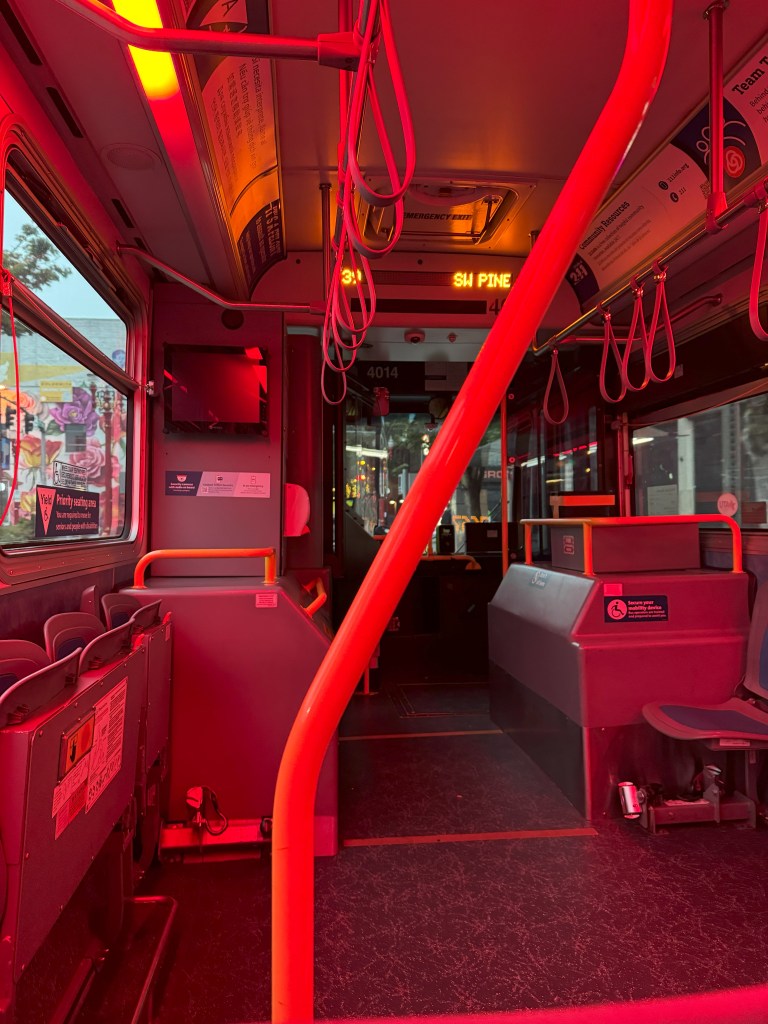
Also, as we entered the suburbs, the roadway gained a bus lane (particularly on uphill sections). This gave the bus an advantage in traffic, but also probably helped prevent it from slowing down others when traffic is light. After all, buses tend to be slower on uphill grades, especially when loaded with people. This concept was a great idea that helped both motorists and transit users alike.
Our ride on the 54 ended punctually and uneventfully at the intersection of SW 45th Avenue and the SW Beaverton Hillsdale Highway. From there, we had a short 10-minute walk to the person’s home from our stop.
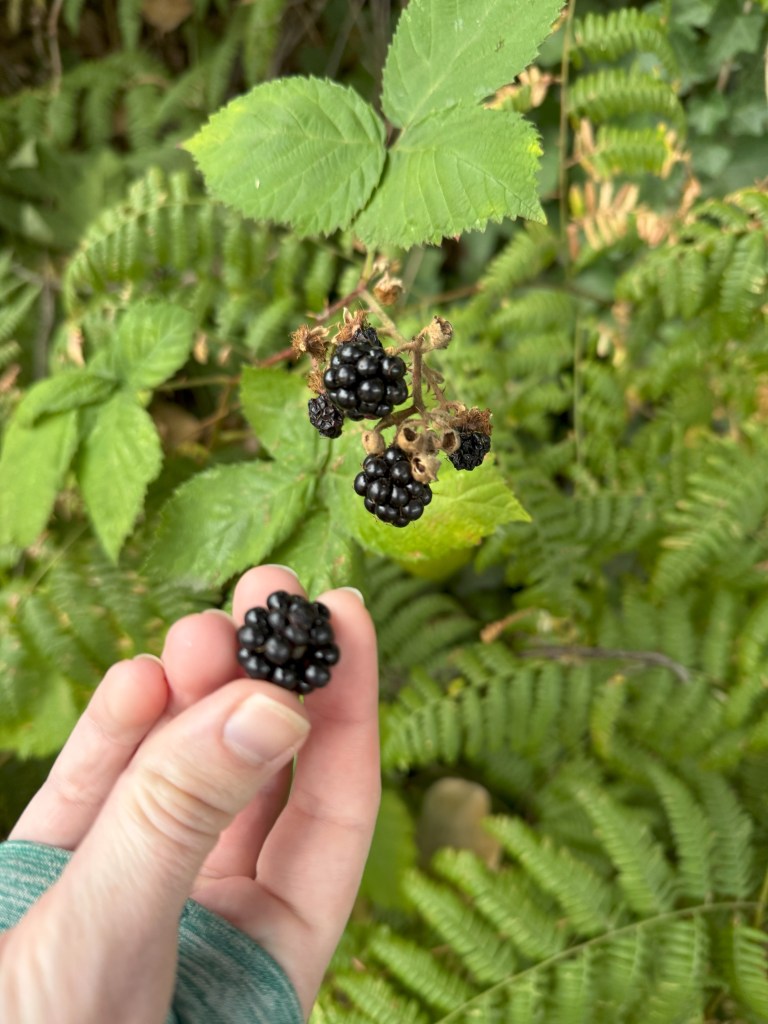
I decided to get a coffee from a nearby coffee kiosk that had just opened for the morning, and, along our walk, my wife grabbed a few ripe blackberries from roadside blackberry bushes. The idea of eating fruit growing along a roadside was foreign to me as a Phoenix native, but the berries were delicious. Between the public transit, the natural resources, and the urban design, I remembered why I’ve always been fond of Portland.
Headed to the Coast
Despite having no car, we were, ironically, the first to arrive at our meeting spot. The rest of our group arrived a few minutes later. We were introduced to new friends before we split up into two cars and left for the coast. The drive to our hike at Cape Falcon would take a little under 2 hours.
It doesn’t take long for the scenery to change as you drive out of Portland. The landscape quickly turns to farmland before becoming hilly forested terrain as you near the coast. Evidence of the timber industry is evident in various places along the way, with some hillsides being devoid of trees.
Most people think of the coast and think of warm, sunny beaches. That is not the case for the Oregon Coast. In fact, as we parked the car at our trailhead, the weather briefly turned blustery. For a few minutes, wind gusted through the trees, a light rain began to fall, and some of the earliest falling leaves gusted across the highway.
I was content, especially as the rain let up once we started our hiking.
Signs posted in the parking lot presented ominous warnings about the condition of our trail. Warnings showed rough terrain, but my traditional Brooks running shoes were sufficient for the hike. We hadn’t planned for a day at the coast when we packed for the trip, so my hiking boots were at home.
The forested trail became more crowded as the day went on. The elevation gain was modest, and the trail’s terminus offers sweeping views of the rugged Oregon coastline.
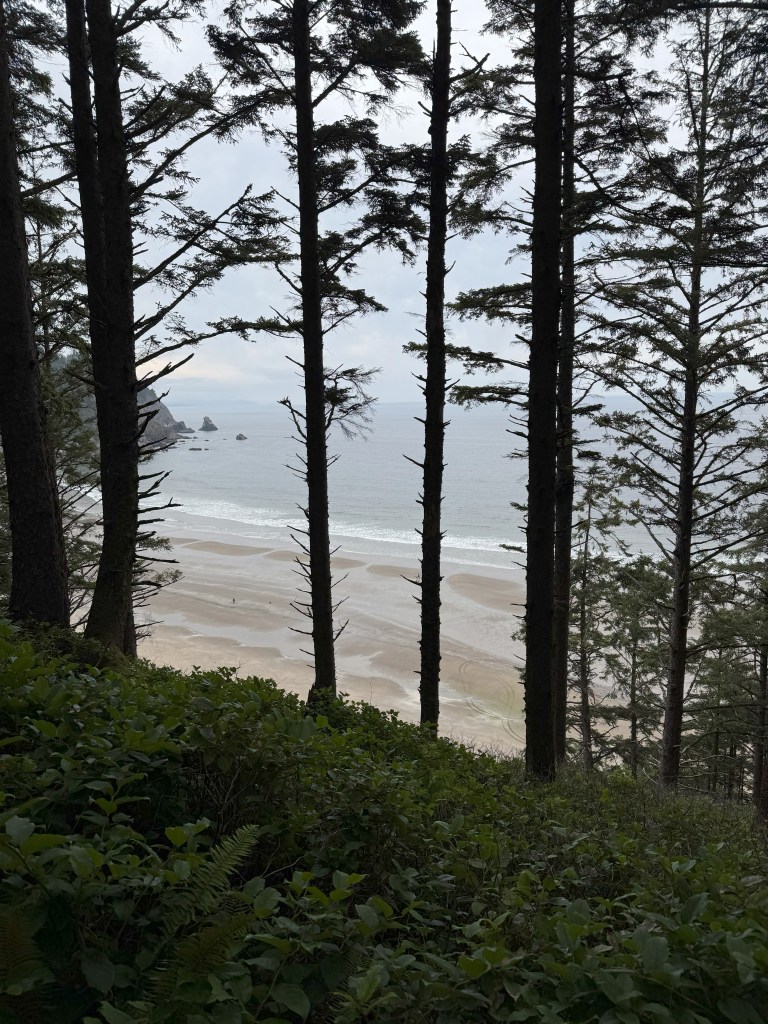
While the region isn’t known for sandy beaches, it is beautiful to see the contrast between forests, steep cliffs and the Pacific Ocean. It also gives an opportunity to see how the coastline creates microclimates. You can plainly see some hills getting heavier rain as the moisture rich air collides with steep terrain. Also, while we didn’t have our binoculars with us, it was a great place to see wildlife.
The return hike to the car was unusually speedy. After all, lunch awaited us in the nearby beach town of Manzanita.
An Afternoon in Manzanita, Oregon
Manzanita is a quaint beach town about 14 miles south of Cannon Beach. Most of the shops lean into beach town stereotypes with things like salt water taffy and beach cruiser rentals.
I particularly thought it was interesting to see some shops using Caribbean themes for their marketing, considering how distinctly non-Caribbean the weather is in Oregon. After all, it was Labor Day weekend and many of us were wearing sweatshirts. It doesn’t detract from the town, but I just found it ironic.
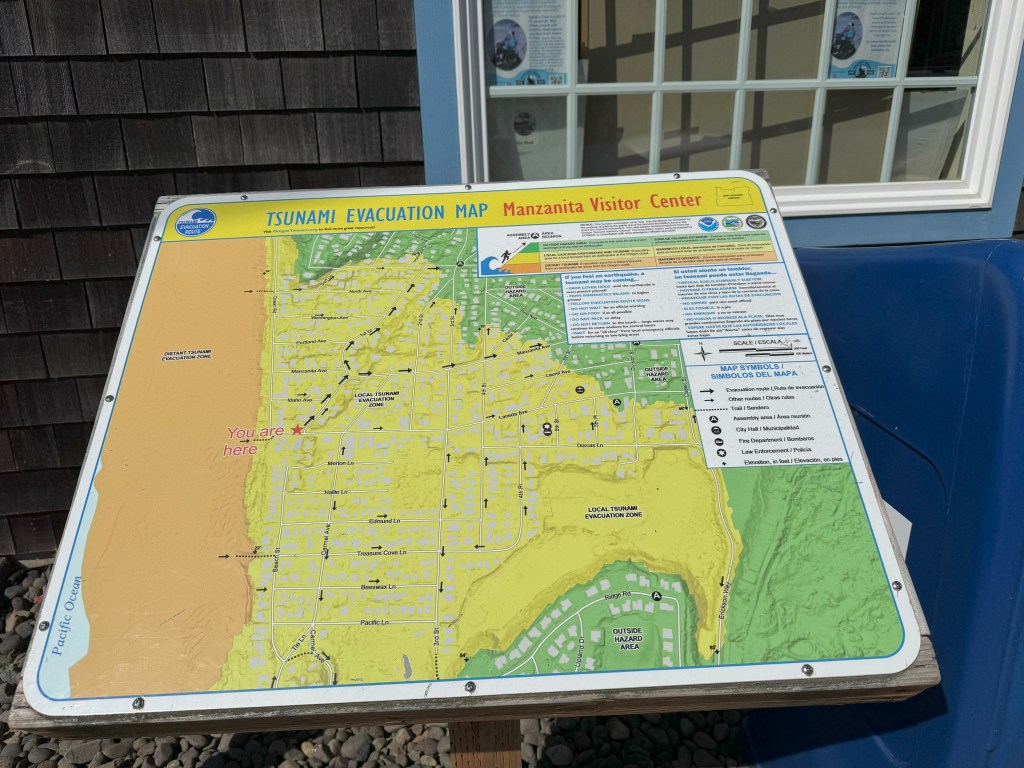
One particularly notable find in Manzanita was the Cloud and Leaf Bookstore (Link to TripAdvisor Page: Cloud and Leaf Bookstore). I’ve become a fan of a good independent bookstores and, while small, this one was excellent. The selection was diverse and covered various topics and perspectives. It also seemed to be engaged with the immediate community. I was happy to see the store buzzing with activity that Saturday.
We spent the next hour or so wandering the town until 3 pm. With everyone’s energy level clearly depleted, we got into the cars and headed back to Portland.
The drive back was uneventful with a few people dozing off before our friends dropped us off at the Sunset Transit Center in Beaverton. From there, we caught an older-but-well-maintained MAX train back to Pioneer Square.
 Pistons Then Pedals
Leave a comment