July is a difficult month for us in Phoenix. The hot daytime temperatures are expected for a desert, but the warm nights are especially challenging. The overnight lows often stay in the 80s. The monsoon season starts to show life, which adds humidity.
Some of the most diehard bicyclists will endure the morning heat. I’ve lived in Phoenix for my entire life, but I am not one of those bicyclists.
The Jetta has replaced the eBike as my daily driver this month. I’m still taking the eBike to the grocery store since it’s less than a mile away. Unfortunately, everything else has been taking the car.
Indoor Cycling on the TacX Flux S
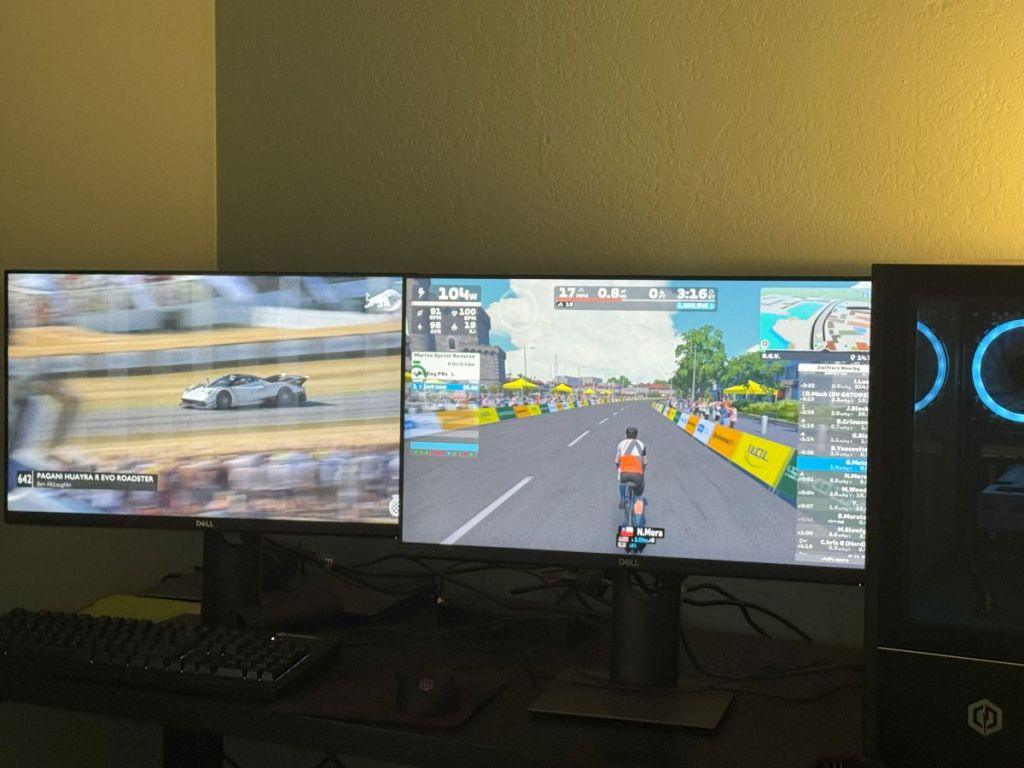
I have also taken my fitness cycling indoors. The Canyon is set up on the TacX Flux S indoor trainer (Website: Garmin TacX Flux S). It faces my computer with two monitors. My normal fitness setup now is to stream something to watch on my left monitor. My right monitor shows my Zwift session for indoor bicycling.
Then, unless it’s a recovery ride and I’m listening to the show/event, I’ll listen to music on Pandora through my headphones. My go-to playlist on the bike lately seems to be EDM.
Indoor cycling is not as fun as riding outside. However, there are benefits. I don’t have a power meter on my bike to display the amount of power I’m producing in watts. The TacX has that data. This means my summertime indoor workouts let me focus on power output, rather than just my heart rate.
It also lets me compete with people online. In the real world, I have not been able to find a road bike community. I don’t enjoy riding with people who blast through stop signs and traffic lights. To me, it’s a poor reflection of bicyclists and doesn’t help us gain community support. Yet, many of the groups that I’ve tried to ride with do this.
Online, there are no stop signs or cars, so I can just focus on my workout. This can be through challenging segments, tough climbs, or simple sprint races against other people.
I’ve noticed that, while my weekly miles have dropped in quantity, I’m losing weight and improving my power output. My workouts are more productive.
Incoming Parts for the Canyon
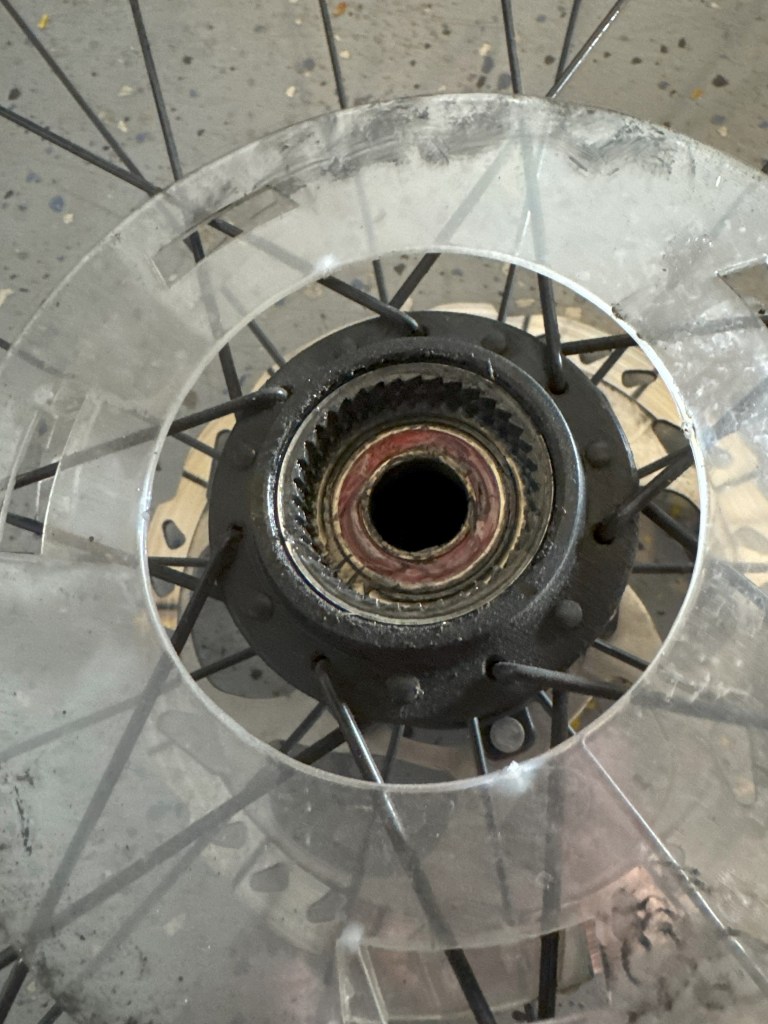
My time indoors has also allowed me to do more research on the new wheelset for the Canyon. I think I’ve written about it in the past, but the factory-included Fulcrum wheels failed. I was removing the cassette and the hub basically disintegrated.
I’ve decided that the next wheelset will be from Astral Cycling (Website: Astral Cycling). I’m opting for alloy wheels with a White Industries CLD hub (Website: White Industries). My plan is to eventually move these wheels from the Canyon to a fully custom bicycle build over the next few years.
In the meantime, these wheels support independent companies on the West Coast. The wheels are built in Eugene, Oregon, using hubs built in Petaluma, California.
The White Industries hubs feature a titanium freehub body. This part holds the cassette (rear gear). On my current wheels, the freehub body is aluminum. Aluminum is a softer metal which starts to embed around the gear when you produce enough power. I saw this happening when I removed the cassette.
The incoming hubs are also serviceable and rebuildable. This aligns more with my ethos towards cycling products now. I’d rather buy durable equipment with a slight weight penalty that lasts a long time. My plan is to order these wheels in September as the weather begins to cool down.
I might also be replacing the Canyon’s bottom bracket at the same time with one from Wheels Manufacturing in Colorado (Website: Wheels Manufacturing). The bottom bracket is the piece which connects the pedals together. It has bearings that allow the “spindle” to connect your pedals and rotate within the bike frame.
Most manufacturers now use bottom brackets which are basically disposable. As they wear out, you replace the entire thing. I’m moving towards repairability, which means bearings can be replaced independently.
 Pistons Then Pedals
Leave a comment