What defines a great adventure vehicle? Why do people value tackling the toughest terrain, while others prioritize all-around capability?
Whether someone is building up an off-road rig or a touring bicycle, the reality is that each person has their own expectations for their vehicle. One individual might prioritize rocky technical terrain in the deserts of southern Utah. Meanwhile, another person might want to cover larger distances across different surface types. You might want to be self-sufficient for weeks while others value an occasional stay in a hotel.
My experience has been that the best vehicle is the one which is purpose-built for my needs.
Accept My Reality
The most important step of building a highly capable vehicle is evaluating your priorities. What do you want to do? How do you want to adventure? What are your limitations?
In the automotive world, overlanding is a lucrative niche. People are willing to spend sixty thousand dollars on a brand-new vehicle and then spend thousands more on modifications.
Some of these vehicles are pushed to their limits in rugged places like Colorado’s San Juan Mountains or California’s Mojave Desert. However, other owners are sacrificing on-road safety, fuel efficiency, and comfort to tour roads which a light-duty crossover could manage.
Take the time to evaluate your needs.
For example, if you have a job with limited vacation time and plan on weekend camping trips with the family, it might not make sense to spend ten thousand dollars on a lift kit, oversized all-terrain tires, and all the other off-road goodies.
Similarly, if you are planning to spend weeks off-grid in the backcountry of the American West, a vehicle without a low range transfer case will not be capable enough.
At one time, I desperately wanted a Jeep Wrangler. The idea of exploring remote rugged terrain seemed great. However, based upon my own household income, I wasn’t willing to sacrifice other financial goals for that level of investment. I also realized that my trips valued long stretches of highway and regular hotel stays.
There is simply no reason for me to buy a Jeep Wrangler Rubicon, install a lift kit, and suffer from poor fuel economy. The capability would be wasted on me. I worry too much about breaking expensive things.
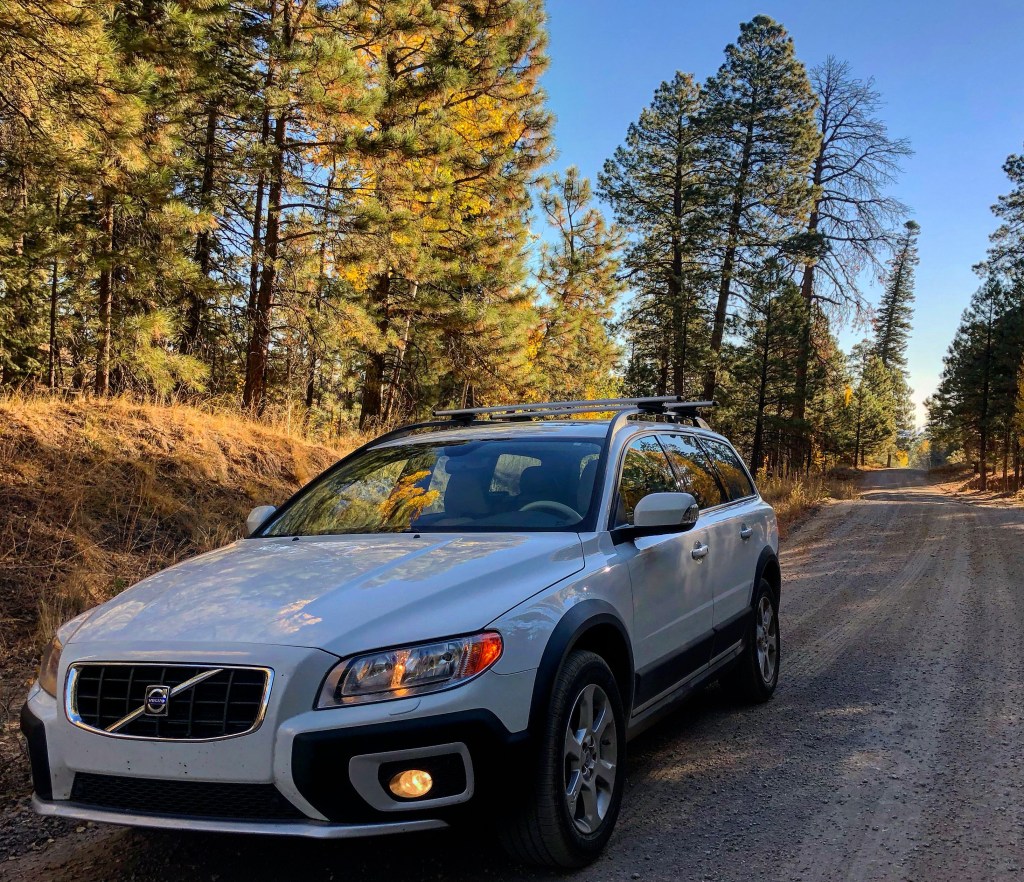
So, instead, I bought a 2009 Volvo XC70. It has almost nine inches of ground clearance, massive cargo capacity, an above-average roof rack capacity for a rooftop tent, great fuel economy, and excellent safety ratings. The suspension is comfortable on forest roads, and the Swedish-tuned all-wheel drive excels in winter storms. I can’t take the Volvo on Sedona’s slickrock trails, but I also don’t want to.
Consider Tradeoffs
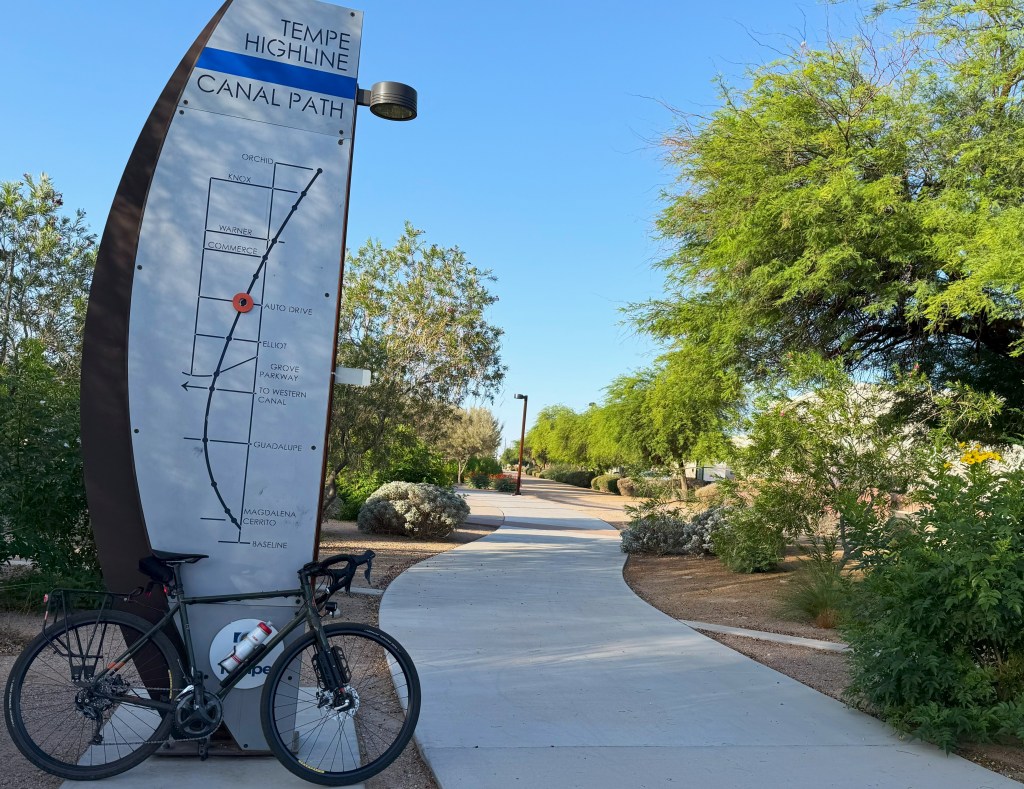
There are few things in life with no tradeoffs. Our decisions have pros and cons. I learned from building up my adventure bicycle. For example, I decided to buy new tires this week for it. The old tires did not hold up to my desert environment.
I chose Schwalbe Green Marathons. Marathons are well-known for their puncture resistance and long lifespan. In exchange for those benefits, they are heavier and provide a stiffer ride. The Fuji will be slower, but I’ll be able to trust my tires again.
Tradeoffs are also a part of automotive adventure.
My rooftop tent provides a comfortable place to sleep that is quick to set up. However, it was expensive and added one hundred and fifty pounds to the roof. I lost about two miles to the gallon from the aerodynamic drag. It also made the vehicle top-heavier. The fiberglass construction has developed microcracks, but the canvas construction is silent in the wind.
Optimize & Adapt
Be willing to learn from your mistakes. Also, adapt to your environment. It is okay to realize that a purchase was not a good decision. One of my favorite phrases is, “just because you made a mistake doesn’t mean you have to keep making it.”
For me, a roof-mounted awning was an example of this. The Volvo had a six-foot-long awning attached to the roof before the tent. One weekend, we went camping in the Kofa National Wildlife Refuge. The expansive desert refuge is west of Phoenix near the California border.
We had just parked the Volvo and started to set up our campsite. The wind was calm, and the skies were clear. The awning was set up and extended out from the driver side of the vehicle. It was not staked into the ground because of the pleasant conditions.
Suddenly, a random dust devil formed in the warm air. It traveled directly over the Volvo and its’ awning. We watched from a distance as the unsecured awning folded over the top of the vehicle in the swirling dust.
Nothing was significantly damaged, but the Volvo could have been. It would have been easy for one of the awnings’ legs to smash against a window or body panel. We learned to always stake down the awning, regardless of conditions, but it was not the last tradeoff.

Another sacrifice with a vehicle-mounted awning is the awning’s ability to provide shade from various directions. As the sun moves through the sky, the shade moves too. Depending on how the vehicle is parked, there are times when the vehicle itself is getting all the shade. It’s easier to stay in the shade with a standalone shade structure.
Finally, we camp in areas with black bears. Black bears are rarely aggressive against humans, but they can be curious creatures. We use our shade structure to provide cover for our food preparation area.
Personally, I realized that, if I’m cooking a steak or something, I’m marinating the vehicle with the scent of meat. Best practices say that food should be prepared away from the campsite. That way, a bear is less likely to be attracted to where you are sleeping.
I decided that, although the awning was a costly purchase, it was not a good fit for our needs.
Limit Technology
For years, I was an early adopter of technology. The majority of my purchases in the late 2010s, like my eBike, have been great. However, my purchases of new technology have been less successful over the past few years.
Almost everything uses an app now. These apps clog up my device while scraping my data and demanding constant updates. Also, even if the app is good now, there is a good chance that a future update will make it worse. Not to mention, there is the never-ending push to subscriptions.
Now, dependence on technology is a factor in my decision-making process. Does this product require an app to fully use it? What are the company’s privacy policies? Does the product use proprietary parts? Can I repair it?
There are times when I’ll accept a subscription or an app. However, I first try to find simpler alternatives.
 Pistons Then Pedals
Leave a comment