N+1.
The bicycling community jokingly references this formula to tell people how many bicycles they should own. N is the number of bicycles currently owned. In other words, bicyclists should aspire to always own one more.
Although this advice is usually meant as a joke, the underlying message reflects our sinister view on consumerism.
Never be content with what you have.
Always want more.
Keep buying.
The Frustrating Burden of Consumption
I subscribed to the N+1 mindset myself for years. While the bicycles I owned became more expensive, the ones I saw on social media were always nicer.
I saw fancy Italian carbon fiber bicycles built in Florence. American custom carbon fiber bicycles made in Arkansas. Fancy drivetrains with ceramic bearings which belong in a Formula One car.
Scrolling filled my boredom with dopamine hits of purchases to aspire to make.
The reality was less exciting. Each added bicycle limited my time and my resources. Maintenance became a never-ending chore. Drivetrain maintenance. Brake pad replacement. Tire repairs. Bolt tightening. Rattle diagnosis.
In some cases, my maintenance obligation increased exponentially with the purchase of a new bicycle. One new bicycle meant two tires to maintain. Two sets of brake pads. Two shift cables.
Many times, tires or brake pads would need to be replaced at the same time on multiple bicycles. This doubled the cost, which meant more household funds that could not be used elsewhere.
Epiphany
I hit my maintenance breaking point this month by owning multiple bicycles. My Canyon road bike suffered a catastrophic wheel failure on the rear wheel. I removed the rear cassette (gear) during regular maintenance to clean it. As I removed the gear, all the wheel hub’s internal guts spilled onto the floor.
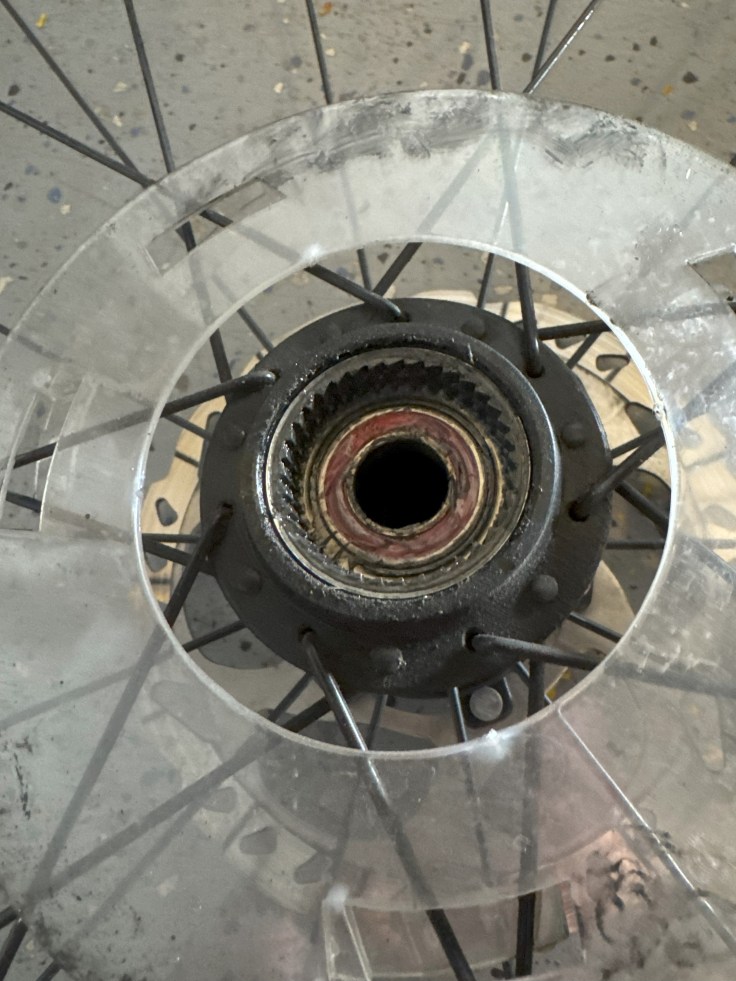
Multiple metal rings chaotically scattered across the floor. This unscheduled disassembly made it impossible to know how to put it back together. I spent hours in a futile attempt. The internet provided no help, and, in the end, I discovered that an essential little pawl inside the hub was missing. A new wheelset was needed.
The Canyon is now assigned to spend the summer on the indoor trainer. A high-quality wheelset costs well over a thousand dollars. I’m planning to eventually buy wheels from Astral Cycling, out of Eugene, Oregon, but I have other financial goals to achieve first.
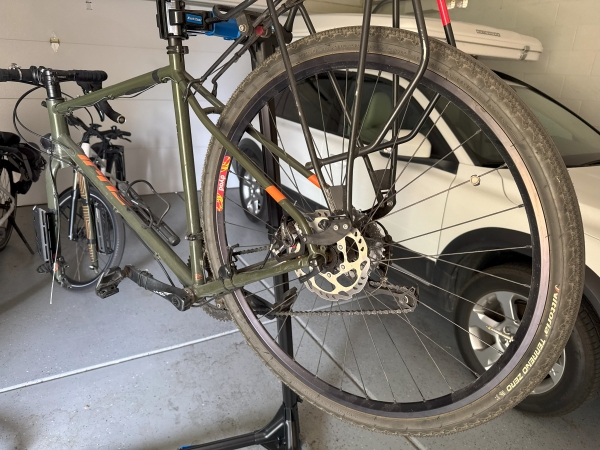
With the Canyon indoors, I began to ride my Fuji Jari. This is a steel bicycle which I have proudly built over the years. Each modification has been carefully selected with durability in mind. The bicycle has no brake fluid or fancy proprietary parts.
It uses tried-and-true technology which has been used for decades. Resilience is the priority. My best friend has even dubbed the bicycle as the “apocabike” because it would provide good transportation in the apocalypse.
However, the Sonoran Desert is a great testing ground. Springtime in the desert is accompanied by flourishing thorny plants. Even where I live in the suburbs, goatheads, Mesquite thorns, and rogue Palo Verde branches await unsuspecting bicyclists. Nature reveals which tire manufacturers exaggerate their puncture resistance.
In my case, the Vittoria tires which I enjoyed so much are not durable enough for my environment. The bicycle sustained three flat tires on three consecutive rides.
Each time, I meticulously inspected the tire and tube for thorns during the repair. I’d go for another ride and then find the bicycle in the garage with another flat. This was even after wiping down the wheelset and replacing the tube entirely. They weren’t trustworthy anymore and had to be replaced.
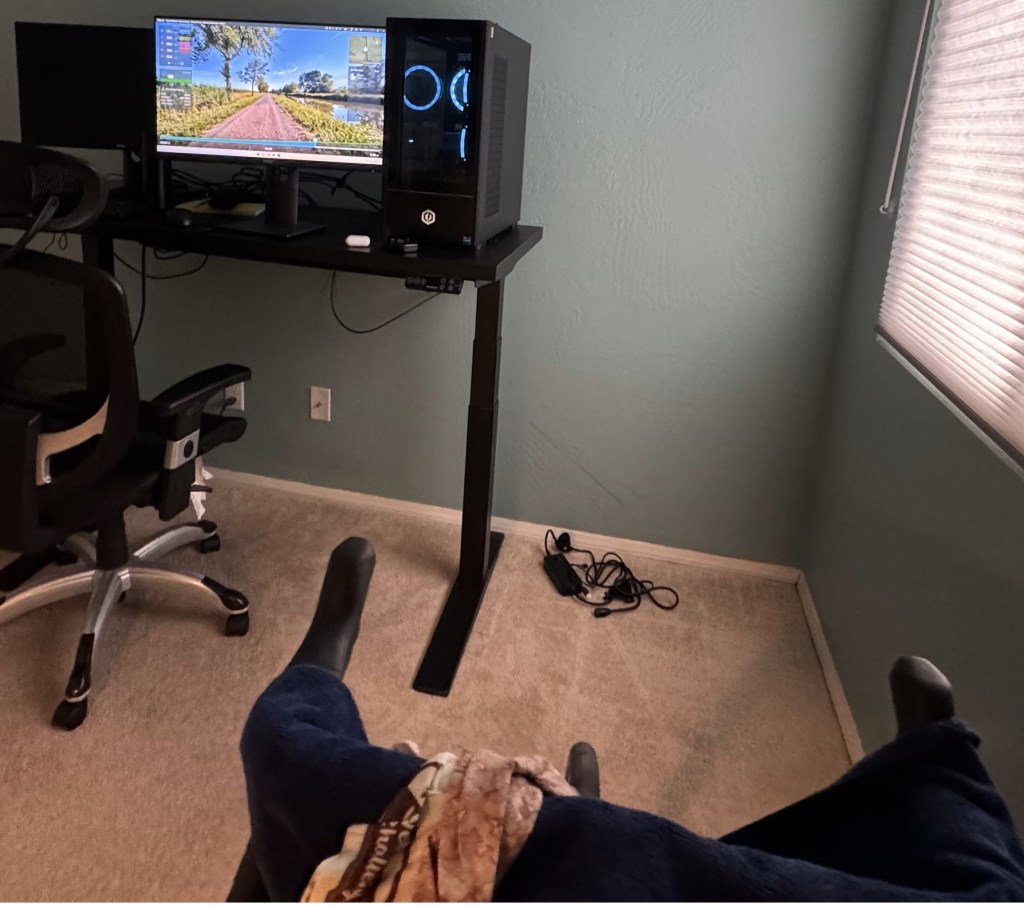
New Schwalbe Marathon tires are now on their way. Although these tires will come at the expense of speed, they will be a better fit for the bicycle’s theme of resilience. For now, I’m just doing virtual rides indoors on the Canyon.
New Approach
I own a road bicycle, a touring bicycle, and an electric bicycle. Each of these serves a distinct purpose which cannot be replaced by one of my others. I won’t be selling any of these bicycles. However, I’m also not going to be buying any bicycles anytime soon.
My multi-year plan is to eventually replace the Canyon with a durable buy-it-for-life custom road bicycle built in the United States. It will be constructed of either steel or titanium. As with the Fuji, longevity will be a primary focus.
Every part purchase will prioritize repairability and longevity. I’m no longer subscribing to the replace-rather-than-repair mindset.
 Pistons Then Pedals
Leave a comment